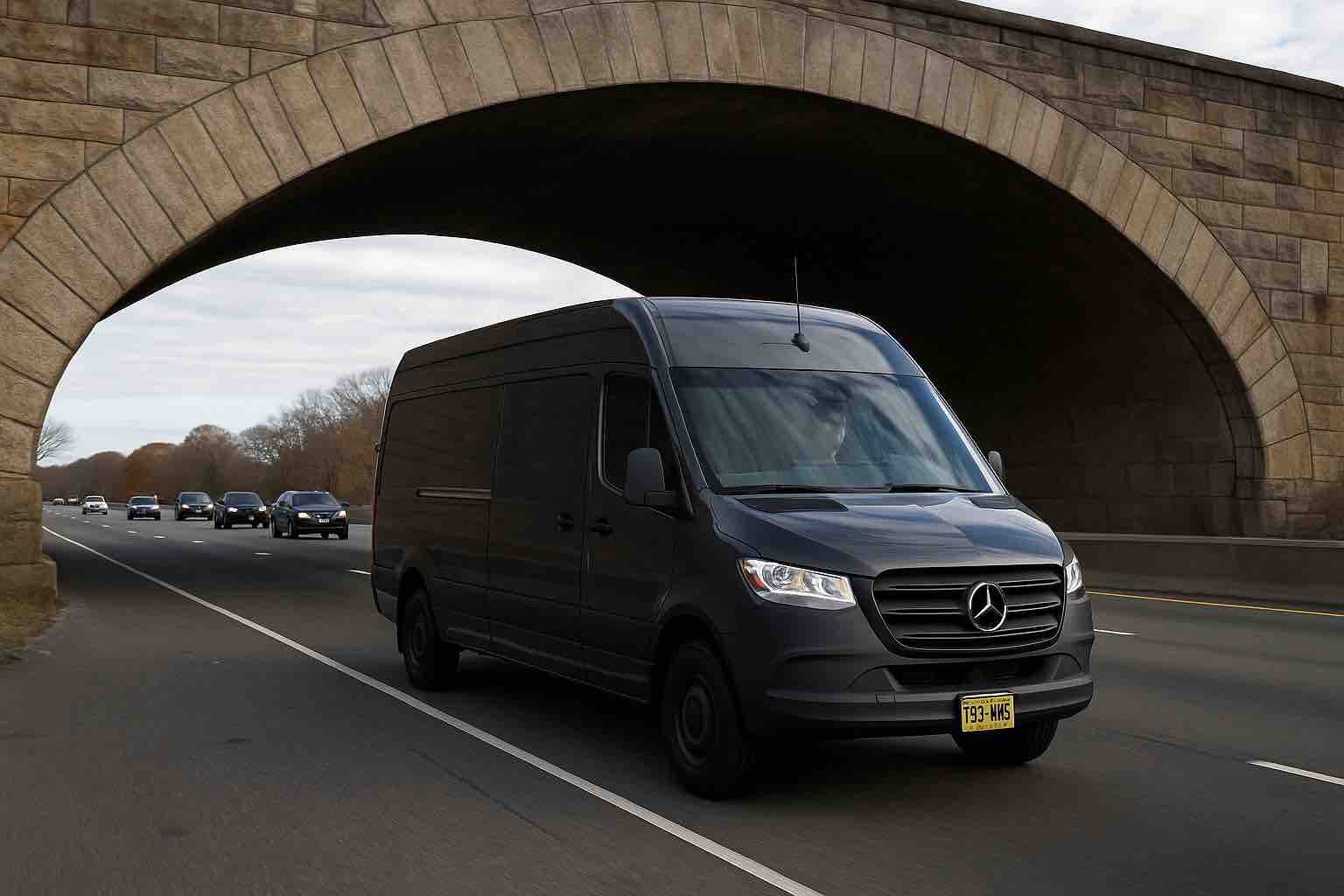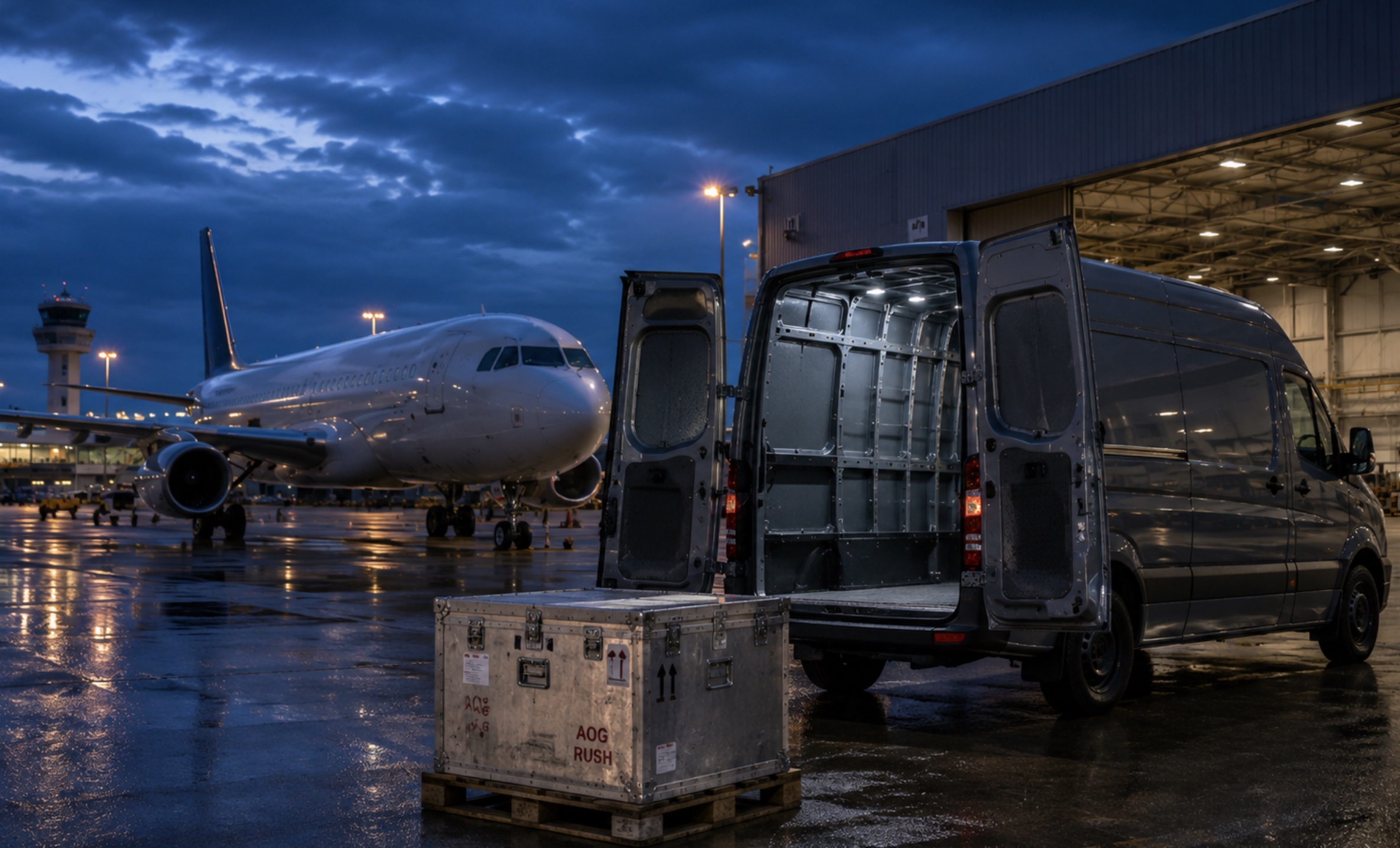
When an aircraft is grounded, the replacement part is not the only thing on the clock.
The transportation is too.
In aviation, Aircraft on Ground, commonly referred to as AOG, creates a very different logistics environment from routine expedited freight.
A replacement component may be sitting at a supplier, distributor, warehouse or airport only a few hours away.
But until that part reaches the maintenance team, the aircraft is still waiting.
That makes transportation part of the repair timeline.
And when every hour matters, ordinary freight processes may no longer be the right solution.
What Makes AOG Transportation Different?
Most supply chains are designed around schedules.
AOG transportation is built around response.
There may be very little notice.
The pickup could happen after normal business hours.
The destination may be an airport, hangar, maintenance facility or MRO.
The shipment might be small enough to fit in one box, or large enough to require a dedicated truck.
And plans can change quickly.
That is why successful AOG transportation requires more than simply finding a vehicle.
It requires communication, coordination and reliable execution from the moment the shipment becomes available until the part reaches the people waiting for it.
1. The Fastest Route Is Often the Most Direct One
Traditional freight networks are extremely effective for routine transportation.
But AOG freight is not routine.
When an aircraft is waiting for a component, additional terminals, transfers, consolidation points and delivery schedules can add time and complexity to the movement.
Dedicated transportation provides a different option.
The vehicle picks up the shipment and moves directly toward the destination.
No freight terminal.
No scheduled linehaul.
No waiting for another truck.
No unnecessary transfers.
For critical aircraft components, eliminating unnecessary handoffs can be just as valuable as eliminating unnecessary miles.
2. AOG Logistics Does Not Always Start at the Airport
When people hear “aviation logistics,” they naturally think about airports.
But an AOG movement can begin almost anywhere.
The required component may be located at:
- An aerospace manufacturer
- A parts distributor
- A warehouse
- Another airport
- An MRO facility
- A repair station
- A machine shop
- An airline supplier
- A freight forwarder
- Another aircraft operator
The transportation challenge is connecting wherever that part happens to be with wherever the aircraft or maintenance team needs it.
Sometimes that means airport-to-airport support.
Sometimes it means warehouse-to-hangar.
Sometimes it means recovering freight from an airport and driving it several hundred miles to the maintenance facility.
And sometimes it means picking up one critical component from a supplier and driving it directly through the night.
The shipment determines the solution.
3. Airport Recovery Can Be the Critical Final Link
Flying a replacement component into the region may solve only part of the problem.
Someone still needs to recover it.
Once an urgent aircraft part arrives at an airport such as Newark, JFK, Philadelphia or another regional gateway, airport recovery becomes the next link in the AOG chain.
The clock does not stop simply because the flight landed.
The shipment may still need to be:
- Recovered from the cargo facility
- Transferred to the appropriate vehicle
- Driven directly to an airport, hangar, repair station or maintenance facility
- Delivered to the correct contact
- Confirmed complete
For time-critical aviation freight, that final ground movement can determine when the maintenance team actually gets the part in its hands.
4. Communication Matters Almost as Much as Speed
AOG transportation is not the kind of freight where the customer should have to wonder what is happening.
Did the driver arrive?
Was the part released?
Has it been picked up?
Where is the vehicle now?
What is the current ETA?
Was the shipment delivered?
Those questions matter when operations are waiting on the freight.
Good AOG transportation therefore requires something beyond a fast vehicle.
It requires proactive communication.
Pickup confirmation.
Status updates.
Accurate ETAs.
Immediate communication if circumstances change.
Proof of delivery.
When the shipment is critical, visibility should not be treated as an optional service.
It is part of the job.
5. The Right Vehicle Is the One the Part Requires
AOG does not describe the size of the shipment.
It describes its urgency.
One aircraft component might fit in a small vehicle.
Another may require a cargo van.
Larger assemblies may require a Sprinter, straight truck or even larger equipment.
Some shipments may require additional handling capabilities based on their dimensions, weight or loading environment.
Larger aerospace assemblies, specialized ground-support equipment, and oversized manufacturing components may require heavy haul transportation in the Northeast, including lowboy trailers, specialized loading arrangements, permits, and route planning.
That is why transportation decisions should start with the freight itself:
What are the dimensions?
What does it weigh?
How is it packaged?
Where is it being picked up?
Where does it need to go?
When does it need to be there?
Then the appropriate equipment can be matched to the mission.
The objective is not to put every AOG shipment into the same type of vehicle.
The objective is to get the right vehicle under the freight as quickly and safely as possible.
6. After-Hours Is Part of the AOG World
Aircraft do not only experience maintenance issues between 9:00 AM and 5:00 PM.
Neither does the aviation supply chain.
AOG requests can happen at night, on weekends and when normal shipping departments are closed.
That is where hot shot transportation and direct-drive service can become especially valuable.
Availability and responsiveness matter.
A transportation provider serving the aviation industry needs to understand that an after-hours call may not be an inconvenience.
It may be the entire reason the call is being made.
When an aircraft is waiting, “we can pick it up tomorrow” may not be a meaningful solution.
7. Every Handoff Creates Another Opportunity for Delay
A critical aircraft component can involve multiple organizations before it reaches the maintenance team.
Supplier.
Distributor.
Freight forwarder.
Airline.
Cargo terminal.
Ground transportation provider.
Maintenance facility.
Each organization plays an important role.
But every transition also creates another point where communication can break down or time can be lost.
Dedicated ground transportation helps simplify one portion of that chain.
Once the shipment is in the vehicle, the focus becomes straightforward:
Get the part where it needs to go.
That simplicity has value when the overall logistics situation is anything but simple.
8. Reliability Matters Because Someone Else Is Waiting
AOG transportation has an unusual characteristic.
The freight itself may be sitting quietly in the back of a truck.
But somewhere else, people are waiting for it.
Maintenance technicians may be ready.
Tools may be staged.
A hangar may be occupied.
Schedules may be changing.
Other operational decisions may depend on the arrival of that component.
That creates a level of responsibility that is easy to underestimate if AOG freight is treated like an ordinary delivery.
The driver may be transporting one crate or one box.
Operationally, however, that shipment can represent much more.
Build the Transportation Relationship Before You Need It
The worst time to start searching for an AOG transportation provider is after the aircraft is already grounded.
That is when every phone call costs time.
A better approach is to establish transportation relationships beforehand.
Understand the provider's operating area.
Review capabilities.
Exchange contact information.
Discuss airport requirements.
Confirm insurance and credentials.
Understand available equipment.
Then when an AOG situation occurs, the conversation can become much shorter.
“We have a part ready.”
“Send us the details.”
That is the kind of transportation relationship time-critical logistics demands.
Nor’East Xpress AOG & Aviation Transportation
Nor’East Xpress provides dedicated and expedited ground transportation supporting aviation and aerospace logistics throughout the Northeast.
We work with freight forwarders, logistics providers, suppliers, manufacturers and other transportation partners when aircraft parts and aviation-related freight require direct, time-sensitive movement.
Our capabilities include:
- Dedicated expedited transportation
- AOG aircraft-parts delivery
- Airport recovery and delivery
- Same-day and direct-drive service
- Final-mile transportation
- Sprinter capacity
- Straight-truck and additional equipment capacity through qualified transportation partners
- TSA and TWIC credentials for applicable shipments and facilities
- Direct communication and shipment-status updates
Our Northeast operating footprint provides access to major aviation markets and airports including EWR, JFK, PHL and IAD, along with maintenance facilities, suppliers, manufacturers and distribution operations throughout the region.
When the Aircraft Is Waiting, Transportation Becomes Part of the Mission
AOG logistics ultimately comes down to something very simple.
There is a part somewhere.
An aircraft needs it somewhere else.
And somebody has to connect the two.
Quickly.
Reliably.
With clear communication from beginning to end.
Because when an aircraft is waiting, transportation is no longer simply moving freight.
It is helping move the operation forward.
Need AOG Transportation Support?
If you are an aviation supplier, MRO, freight forwarder, aerospace company or logistics provider looking for a Northeast transportation partner for AOG or time-critical aircraft parts, contact Nor’East Xpress.
Contact Nor’East Xpress for dedicated Sprinter van transportation throughout New Jersey and the Northeast.
Call 908-291-3153 or 👉 Request a quote online.