For time-critical freight, regional knowledge is not merely convenient. It can be an important part of the transportation strategy.
Nor’East Xpress is a New Jersey-based carrier providing direct expedited freight transportation throughout New Jersey, New York, Pennsylvania, New England, and the broader Northeast and Mid-Atlantic region.
The Northeast Is a Complex Freight Market
The Northeast contains some of the country’s busiest commercial corridors.
Within a relatively compact region, freight moves between:
- Manufacturing facilities
- Pharmaceutical companies
- Hospitals and laboratories
- Distribution centers
- Airports
- Marine terminals
- Construction sites
- Urban businesses
- Government facilities
- Freight-forwarder warehouses
- Technology and research organizations
A shipment may move from a New Jersey industrial park into Manhattan, from Newark Airport to eastern Pennsylvania, or from a pharmaceutical facility to a laboratory several states away.
Each assignment can present different operational requirements.
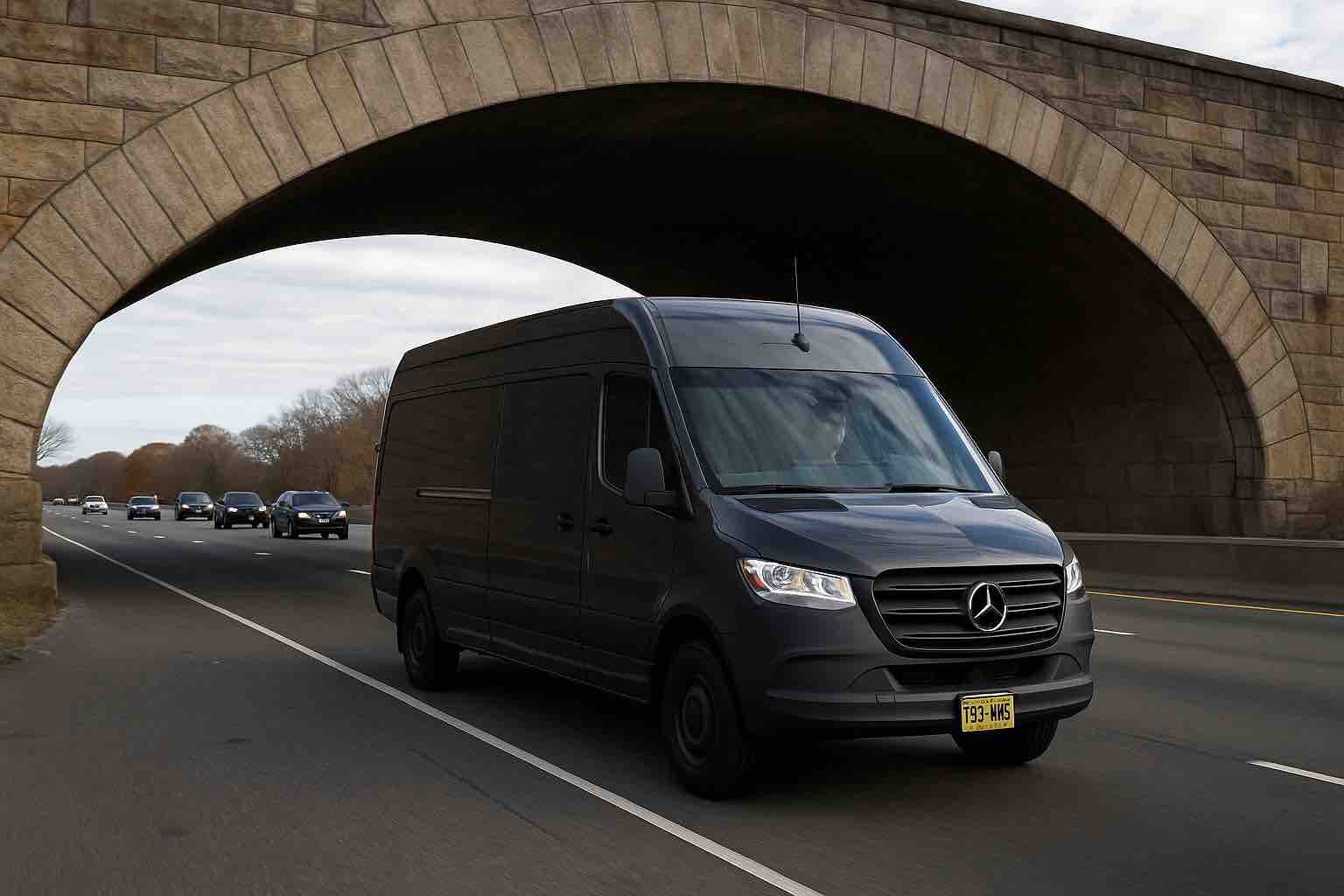
A delivery into New York City may involve bridge or tunnel decisions, restricted loading areas, commercial parking limitations, and narrow receiving windows.
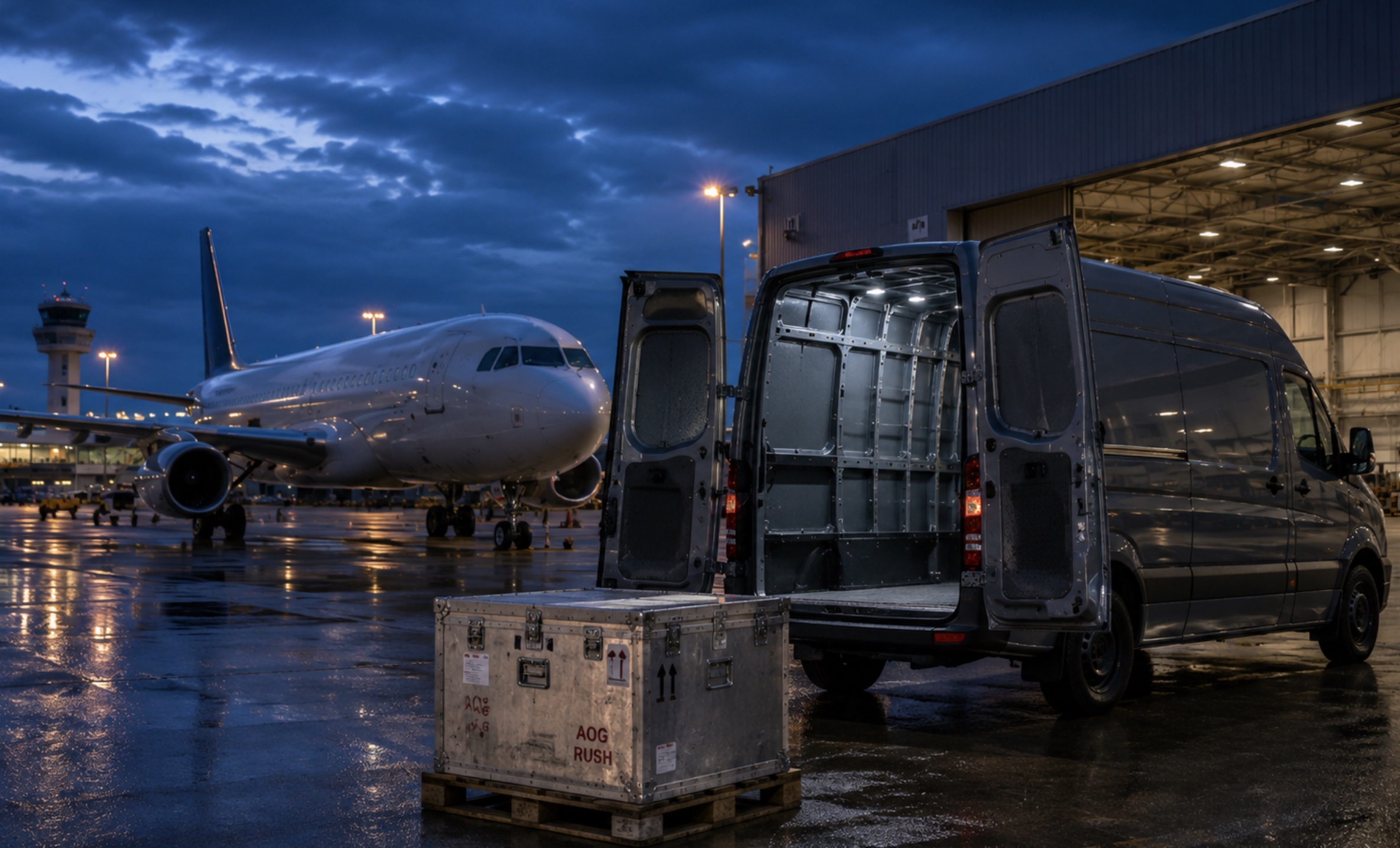
An airport recovery may require an air waybill number, release confirmation, driver identification, and coordination with an airline cargo handler.
A delivery to a hospital, manufacturing plant, government installation, or secured facility may require advance authorization and precise arrival instructions.
The address alone does not tell the entire story.
Regional Knowledge Supports Better Planning
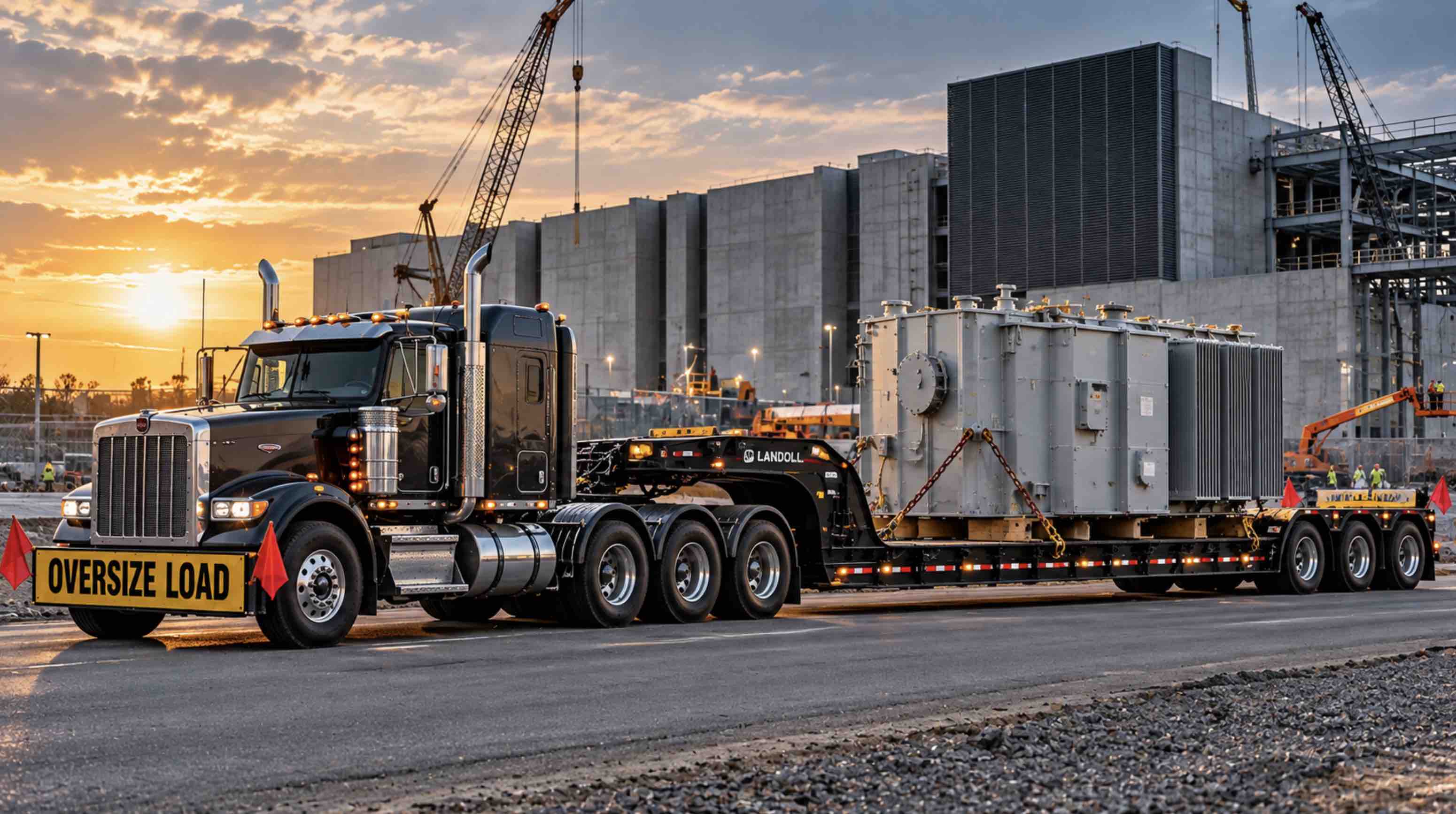
For oversized equipment, industrial machinery, and critical infrastructure projects, regional expertise becomes even more important. Learn how heavy haul transportation in the Northeast requires specialized equipment, route planning, permits, and coordinated delivery.
Navigation software is useful, but it cannot replace complete shipment information and informed planning.
A regional carrier should consider:
- The day and time of pickup
- Anticipated traffic conditions
- Commercial vehicle restrictions
- Bridge, tunnel, and toll requirements
- Construction or road closures
- Airport or port procedures
- Delivery appointments
- Facility access
- Vehicle size
- Loading and unloading requirements
- Realistic transit time
This does not mean every delay can be prevented.
It means the transportation plan can account for the conditions most likely to affect the shipment.
Nor’East Xpress reviews the route, timing, shipment details, and facility requirements before accepting an assignment.
Proximity Can Improve Responsiveness
When an urgent shipment becomes available, the carrier’s starting position matters.
A carrier already operating within the region may be able to respond without first repositioning equipment from a distant terminal or market.
That can be valuable when:
- A production line is waiting for a part
- A technician needs a replacement component
- An airport shipment has been released
- A medical device must reach a healthcare facility
- A customer delivery commitment is at risk
- A freight forwarder needs immediate ground coverage
- A shipment has missed its scheduled connection
Nor’East Xpress is positioned in Central New Jersey to support the NJ and NYC commercial corridor, with extended expedited coverage throughout the Northeast and Mid-Atlantic. Our actual pickup response depends on driver location, current availability, traffic, shipment requirements, and the requested schedule.
We confirm realistic pickup and delivery expectations before the load is booked.
The Value of Direct Communication
Urgent transportation becomes more difficult when information must pass through several layers before reaching the person responsible for the shipment.
A customer may contact a national call center, which contacts a dispatcher, which contacts another transportation provider, which then contacts the driver.
Every additional step can delay updates or create confusion.
With Nor’East Xpress, customers communicate directly with the company coordinating and completing the ground move.
Shipment updates may include:
- Driver dispatched
- Estimated arrival at pickup
- Arrival at the shipper
- Freight loaded
- Departure from origin
- Updated estimated delivery time
- Arrival at destination
- Delivery completion
- Electronic proof of delivery
GPS-based tracking can also be supported when required for the assignment.
The objective is straightforward: provide useful information before the customer has to ask for it.
One Shipment. One Vehicle. One Driver.
Traditional freight networks are designed to combine shipments from multiple customers.
That model can be efficient for routine freight with flexible delivery requirements. It may involve terminals, consolidation, cross-docking, transfers, and several vehicles.
Time-critical freight often requires a different approach.
Nor’East Xpress uses a direct transportation model for accepted shipments.
One shipment. One vehicle. One driver.
The freight is picked up and transported directly toward its destination without unnecessary terminal handling or cross-docking.
This model can help reduce:
- Physical freight transfers
- Terminal waiting
- Missed connections
- Misrouting
- Lost paperwork
- Unclear responsibility
- Delayed status information
It is particularly useful for cargo that is urgent, sensitive, high-value, difficult to replace, or connected to an important operational deadline.
Learn more about the benefits of direct expedited Sprinter transportation.
Local Knowledge Is More Than Knowing the Roads
Regional expertise also means understanding that different facilities operate differently.
Airports
An airport pickup may require:
- Master and house air waybill numbers
- Cargo release confirmation
- Pickup authorization
- Airline or handler information
- Terminal charges
- Driver identification
- Vehicle information
- Facility-specific pickup procedures
Nor’East Xpress supports qualifying airport recovery and line-haul transportation through EWR, JFK, PHL, IAD, and other Northeast and Mid-Atlantic cargo facilities.
New York City
A New York City delivery may require:
- A specific bridge or tunnel route
- Commercial loading-zone planning
- A service entrance
- Advance notice
- A building certificate of insurance
- A strict appointment
- Coordination with security or receiving personnel
- A vehicle that can access a constrained location
The final approach to the building may be more complicated than the preceding hundred miles.
Ports and Secured Facilities
Port and secured-facility work may require:
- TWIC credentials
- Government-issued identification
- Terminal authorization
- Appointment information
- Cargo or container references
- Escort procedures
- Facility-specific access approval
A TWIC credential supports qualifying maritime-facility access, but it does not replace individual terminal authorization or guarantee entry to every secure location.
Healthcare and Pharmaceutical Facilities
Healthcare, laboratory, and pharmaceutical shipments may require:
- Exact receiving contacts
- Confidentiality
- Chain-of-custody instructions
- Temperature requirements
- Delivery documentation
- Limited receiving hours
- Security screening
- Careful handling
Nor’East Xpress supports qualifying medical and pharmaceutical freight throughout the region.
Why Sprinter Transportation Works in the Northeast
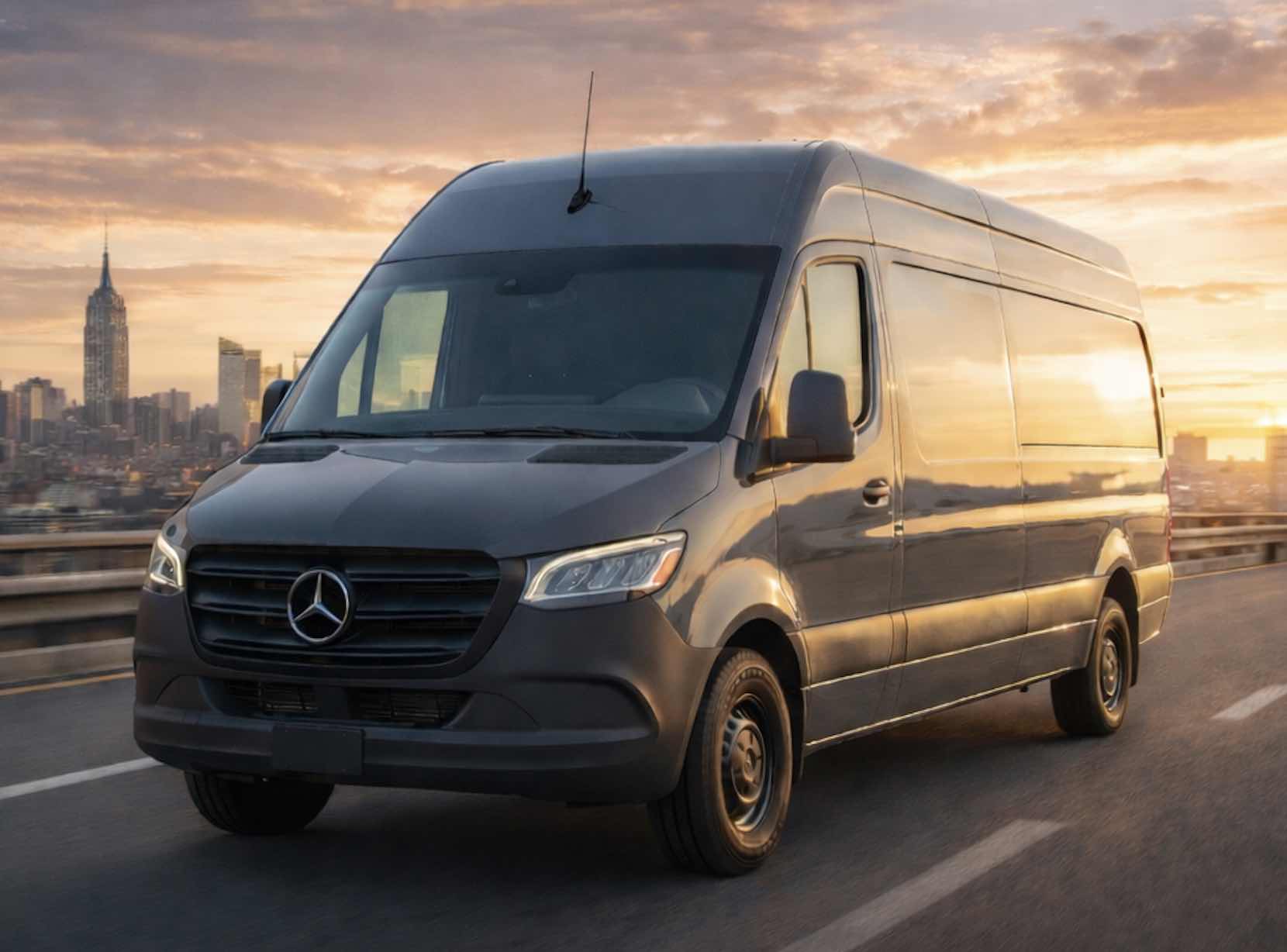
Many urgent shipments do not require a tractor-trailer or box truck.
A dedicated Sprinter may be appropriate for:
- Palletized freight
- Crated equipment
- Manufacturing components
- Aerospace parts
- Medical devices
- Packaged pharmaceutical products
- Electronics
- HVAC and elevator components
- Airport cargo
- Trade-show materials
- Emergency replacement parts
Sprinters can offer useful flexibility in urban and suburban locations where larger equipment may encounter restricted access, limited loading areas, or maneuverability challenges.
The right vehicle still depends on:
- Piece count
- Dimensions
- Total weight
- Pallet configuration
- Loading method
- Unloading method
- Door clearance
- Dock or ground-level access
- Securement requirements
- Commodity type
Nor’East Xpress reviews these details before accepting the load.
Where a Regional Carrier Can Add Value
Manufacturing and Line-Down Freight
A missing sensor, control, tool, motor, or machine component may stop more than one piece of equipment.
It can affect employees, production schedules, downstream orders, and customer commitments.
Direct regional transportation can move the required part without sending it through a multi-terminal freight network.
Healthcare and Life Sciences
Medical devices, diagnostic supplies, clinical materials, and packaged pharmaceutical products may require direct communication, documented delivery, and reduced handling.
A regional carrier can coordinate closely with the shipper, freight forwarder, laboratory, hospital, or receiving facility.
Aerospace and Aviation
Aircraft components, tooling, electronics, and replacement parts often move within strict operational windows.
A physically small part may be connected to a much larger maintenance or aircraft-availability issue.
HVAC, Elevator, and Field Service
Technicians may be waiting at a job site for the specific part needed to complete a repair.
A regional expedited move can connect the supplier or distributor directly with the field team.
Freight Forwarders
Freight forwarders frequently need ground capacity between:
- Airports
- Cargo handlers
- Warehouses
- Customs-bonded facilities
- Shippers
- Consignees
- Final delivery locations
A local transportation provider can serve as the direct ground connection after release or before an export tender.
Government and Defense
Government suppliers and contractors may require carriers with appropriate registration, identification, insurance, and security credentials.
Nor’East Xpress maintains SAM registration, a CAGE code, TWIC credentials, TSA security vetting, MC and USDOT identification, and applicable insurance coverage.
These credentials support qualification and onboarding. They do not replace shipment-specific authorization, facility access, permits, cargo releases, or government-contract requirements.
Credentials Supporting Regional Freight
Nor’East Xpress maintains:
- MC 1696833
- USDOT 4342378
- SCAC NPFJ
- TSA security vetting
- TWIC credentials
- SAM registration
- CAGE code
- HIPAA training
- Bloodborne Pathogens training
- HAZCOM training
- $100,000 cargo coverage
- $1 million commercial auto liability coverage
The relevance of each qualification depends on the shipment, customer, and facility.
For example:
- TSA security vetting may support qualifying air-cargo transportation
- TWIC may support qualifying maritime-facility access
- SAM and CAGE may support government contracting or subcontracting
- HIPAA training supports awareness around sensitive healthcare information
- Bloodborne Pathogens training may be relevant to properly packaged specimens
- HAZCOM training supports chemical-hazard awareness
Credentials do not replace cargo documentation, dangerous-goods training, permits, regulatory releases, appointments, or individual facility authorization.
They help customers verify the identity, authority, insurance, security readiness, and training of the carrier entrusted with the ground transportation segment.
Local Does Not Automatically Mean Better
A nearby carrier is not necessarily the right carrier.
Location is only valuable when it is supported by:
- Proper operating authority
- Appropriate insurance
- Suitable equipment
- Reliable communication
- Realistic scheduling
- Securement capability
- Professional conduct
- Accurate documentation
- Experience with the type of assignment
Customers should evaluate more than the carrier’s address.
They should ask:
- Does the freight fit safely in the vehicle?
- Is the carrier properly insured?
- Can its authority be verified?
- Does it understand the facility requirements?
- Who will provide shipment updates?
- Will the freight remain on one vehicle?
- What happens if the schedule changes?
- How will delivery be documented?
The local advantage comes from combining regional availability with professional execution.
Information Needed for a Regional Freight Quote
To prepare an accurate quote, provide:
- Pickup address
- Delivery address
- Requested pickup time
- Required delivery time
- Number of pieces
- Total weight
- Dimensions of each piece
- Commodity description
- Declared value
- Palletized or loose status
- Loading method
- Unloading method
- Dock or ground-level access
- Appointment requirements
- Site-access instructions
- Driver-assist expectations
- Temperature requirements
- Dangerous-goods status
- Proof-of-delivery requirements
Complete information helps determine whether the vehicle, route, timing, and service are appropriate for the shipment.
The Local Advantage Is Greater Control
The strongest reason to work with a Northeast-based carrier is not simply that the company has a local address.
It is the ability to combine regional knowledge, direct communication, appropriate equipment, and a transportation plan designed around the shipment.
When freight is routine and the delivery window is flexible, a traditional network may be appropriate.
When the shipment is urgent, difficult to replace, connected to a production schedule, or required at a precise time, greater control may be worth more than the lowest transportation rate.
Nor’East Xpress provides direct, time-critical transportation for businesses that need fewer handoffs, clear accountability, and practical regional experience from pickup through delivery.
Need a Northeast Freight Carrier?
Nor’East Xpress provides expedited, same-day, airport recovery, final mile, hot shot, and dedicated-route transportation throughout New Jersey and the Northeast.
To request a quote, provide the pickup location, destination, piece count, weight, dimensions, commodity, and required delivery time.